A source-grounded visual edition generated from stored panel plans. Captions and source text remain outside the artwork.
James the Just at the Temple
A documentary-comic sequence on Eusebius/Hegesippus’s account of James, brother of the Lord: his revered ascetic life in the Jerusalem Temple, his public placement on the Temple battlement during Passover, and his martyrdom by being thrown down, stoned, and struck with a fuller’s club.
Source: Eusebius 2.23.1
AI English text, gpt-5.6-luna
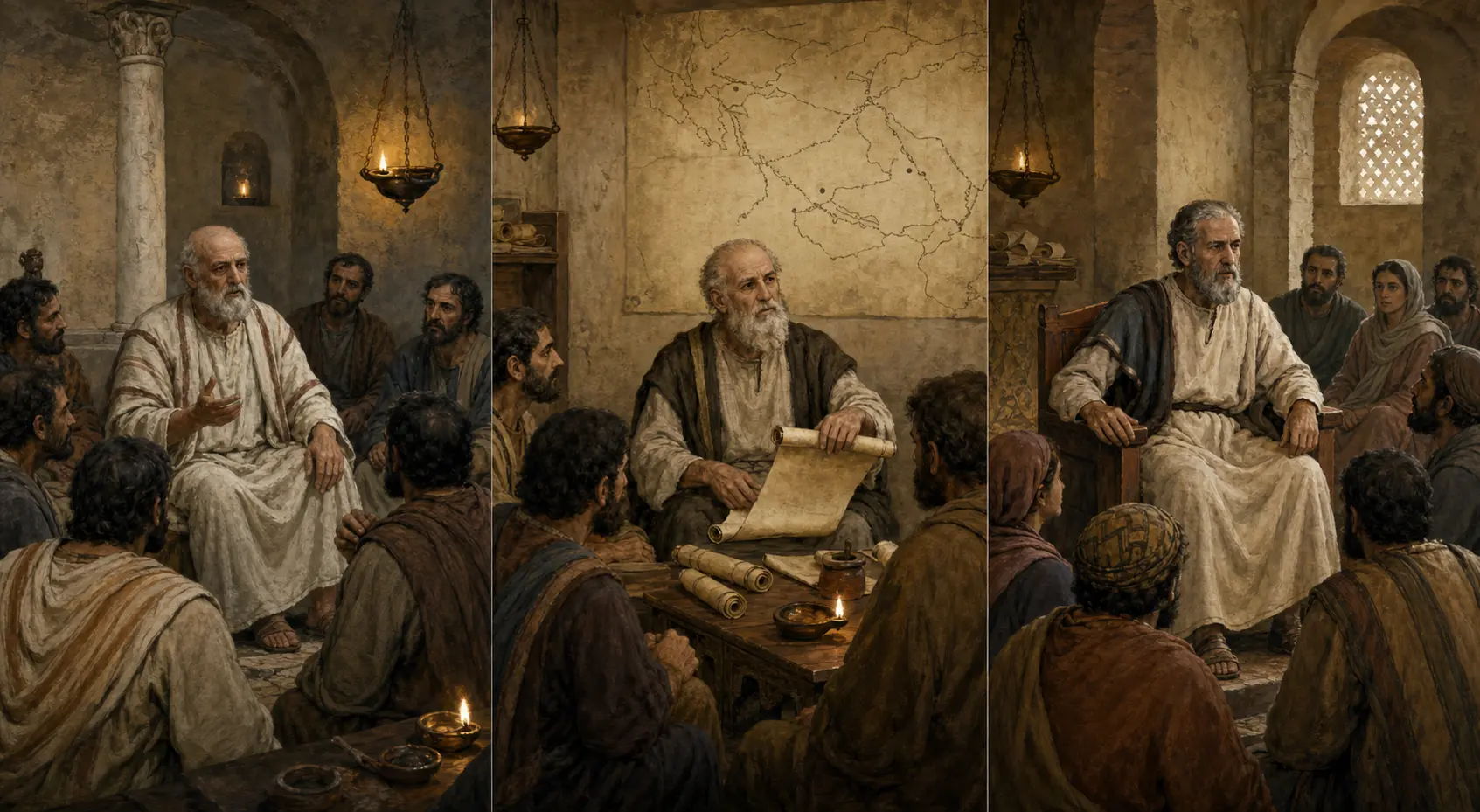
XXIII. When Paul appealed to Caesar and was sent over to Rome by Festus, the Jews were disappointed of the hope in which they had laid their plot against him and turned against James, the brother of the Lord, to whom the throne of the bishopric in Jerusalem had been allotted by the Apostles. The crime which they committed was as follows. They brought him into the midst and demanded a denial of the faith in Christ before all the people; but when he, contrary to the expectation of all of them, with a loud voice and with more courage than they had expected, confessed before all the people that our Lord and Saviour Jesus Christ is the Son of God, they could no longer endure his testimony, since he was by all men believed to be most righteous because of the height which he had reached in a life of philosophy and religion, and killed him, using anarchy as an opportunity for power, since at that moment Festus had died in Judaea, leaving the district without government or procurator. The manner of James's death has been shown by the words of Clement already quoted, narrating that he was thrown from the battlement and beaten to death with a club; but Hegesippus, who belongs to the generation after the Apostles, gives the most accurate account of him, speaking as follows in his fifth book: “The charge of the Church passed to James the brother of the Lord, together with the Apostles. He was called the ‘Just’ by all men from the Lord's time to ours, since many are called James, but he was holy from his mother's womb. He drank no wine or strong drink, nor did he eat flesh; no razor went upon his head; he did not anoint himself with oil, and he did not go to the baths. He alone was allowed to enter into the sanctuary, for he did not wear wool but linen, and he used to enter alone into the temple and be found kneeling and praying for forgiveness for the people, so that his knees grew hard like a camel's because of his constant worship of God, kneeling and asking forgiveness for the people. So from his excessive righteousness he was called the Just and Oblias, that is in Greek, ‘Rampart of the people and righteousness,’ as the prophets declare concerning him. Thus some of the seven sects among the people, who were described before by me (in the Commentaries), inquired of him what was the door of Jesus, and he said that he was the Saviour. Owing to this some believed that Jesus was the Christ. The sects mentioned above did not believe either in resurrection or in one who shall come to reward each according to his deeds, but as many as believed did so because of James. Now, since many even of the rulers believed, there was a saying that the whole people was in danger of looking for Jesus as the Christ. “So they assembled and said to James: ‘We beseech you, persuade the people, since they are straying after Jesus as though he were the Messiah. We beseech you to persuade concerning Jesus all who come for the day of the Passover, for we all obey you. For we and the whole people testify to you that you are righteous and do not respect persons. So do you persuade the crowd not to err concerning Jesus, for the whole people and we all obey you. Therefore stand on the battlement of the temple, so that from above you may be conspicuous and your words may be audible to all the people, for because of the Passover all the tribes, with the Gentiles also, have come.’ “So the scribes and Pharisees mentioned before made James stand on the battlement of the temple, and they cried out to him and said: ‘O just one, to whom we all owe obedience, since the people are straying after Jesus who was crucified, tell us what is the door of Jesus?’ And he answered with a loud voice: ‘Why do you ask me concerning the Son of Man? He is sitting in heaven on the right hand of the great Power, and he will come on the clouds of heaven.’ And many were convinced and glorified God at the testimony of James and said, ‘Hosanna to the Son of David.’ “Then again the same scribes and Pharisees said to one another: ‘We did wrong to provide Jesus with such testimony; but let us go up and throw him down, that they may be afraid and not believe him.’ And they cried out, saying, ‘Oh, oh, even the just one has been deceived.’ And they fulfilled the Scripture written in Isaiah: ‘Let us take away the just man, for he is unprofitable to us. Yet they shall eat the fruit of their works.’ So they went up and threw down the Just, and they said to one another, ‘Let us stone James the Just’; and they began to stone him, since the fall had not killed him. But he turned and knelt, saying, ‘I beseech thee, O Lord God and Father, forgive them, for they know not what they do.’ “And while they were thus stoning him, one of the priests of the sons of Rechab, the son of Rechabim, to whom Jeremiah the prophet bore witness, cried out, saying, ‘Stop! What are you doing? The Just is praying for you.’ And a certain man among them, one of the laundrymen, took the club with which he used to beat out the clothes, and hit the Just on the head, and so he suffered martyrdom. And they buried him on the spot by the temple, and his gravestone still remains by the temple. He became a true witness both to Jews and to Greeks that Jesus is the Christ. And at once Vespasian began to besiege them.”
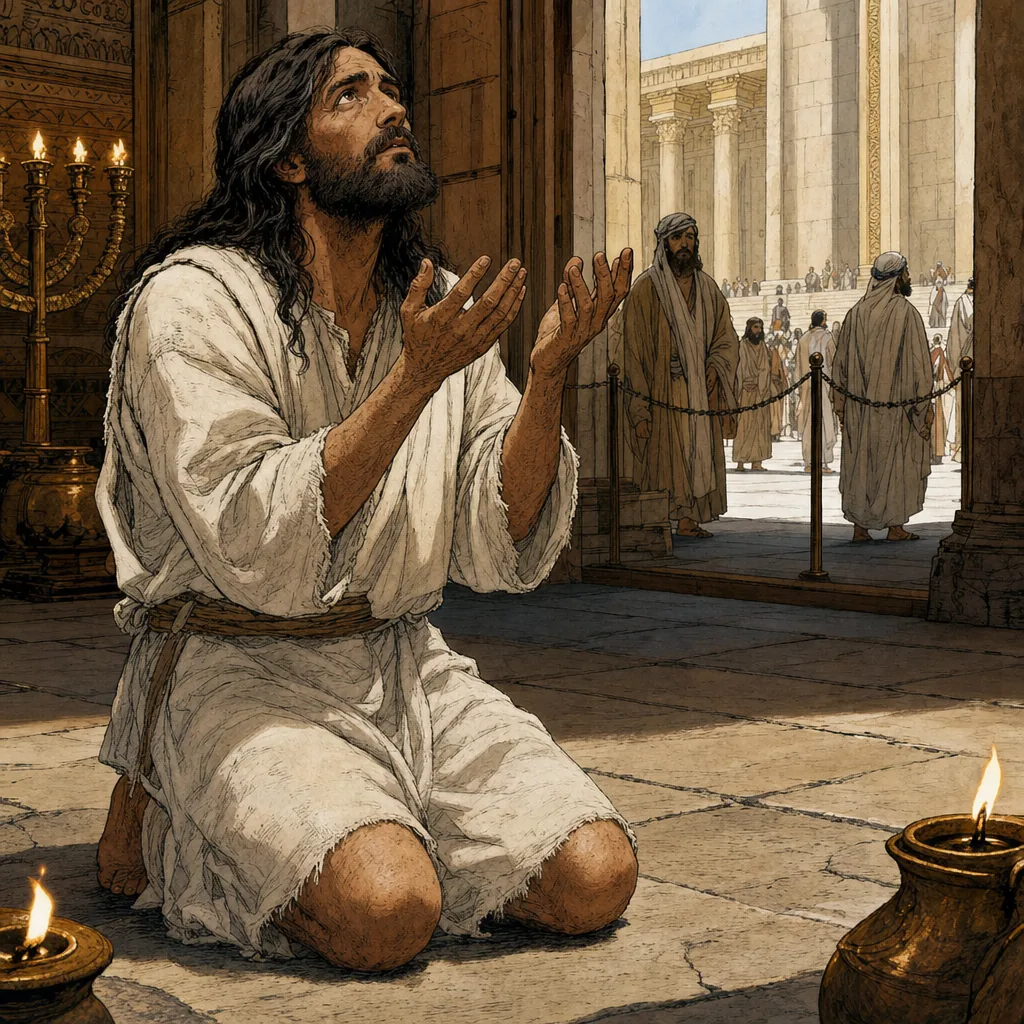
Panel 1: James the Just in the Temple
James the Just in prayer
Image: gpt-image-2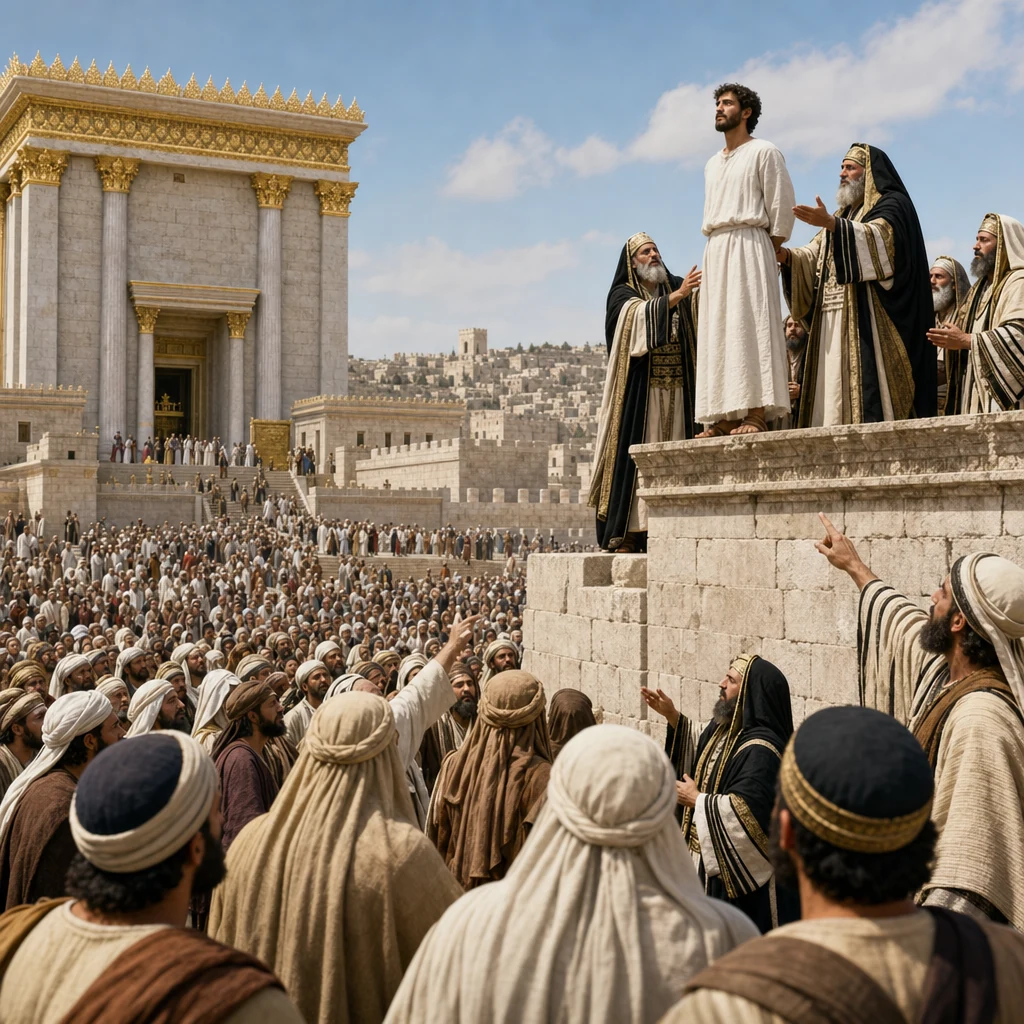
Panel 2: On the Temple Battlement
James placed above the crowd
Image: gpt-image-2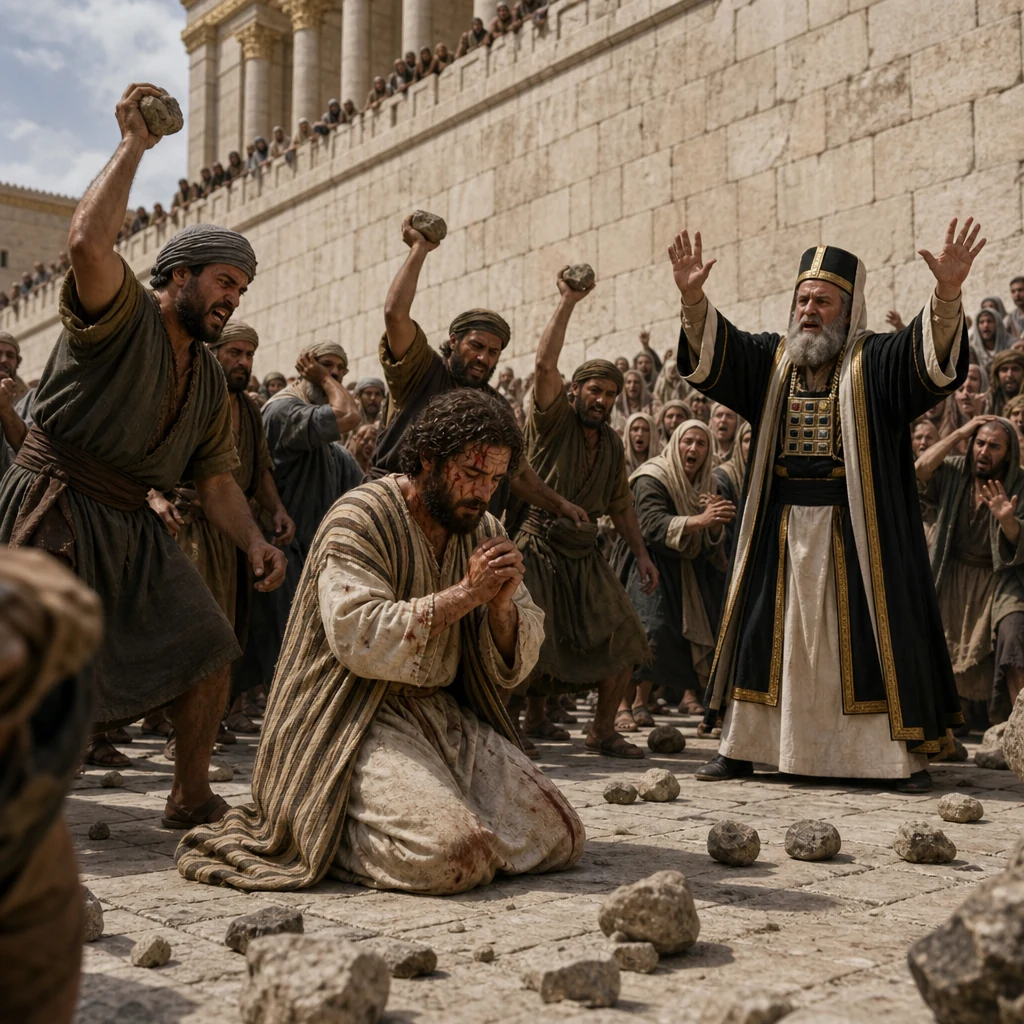
Panel 3: Thrown Down and Stoned
The attack on James
Image: gpt-image-2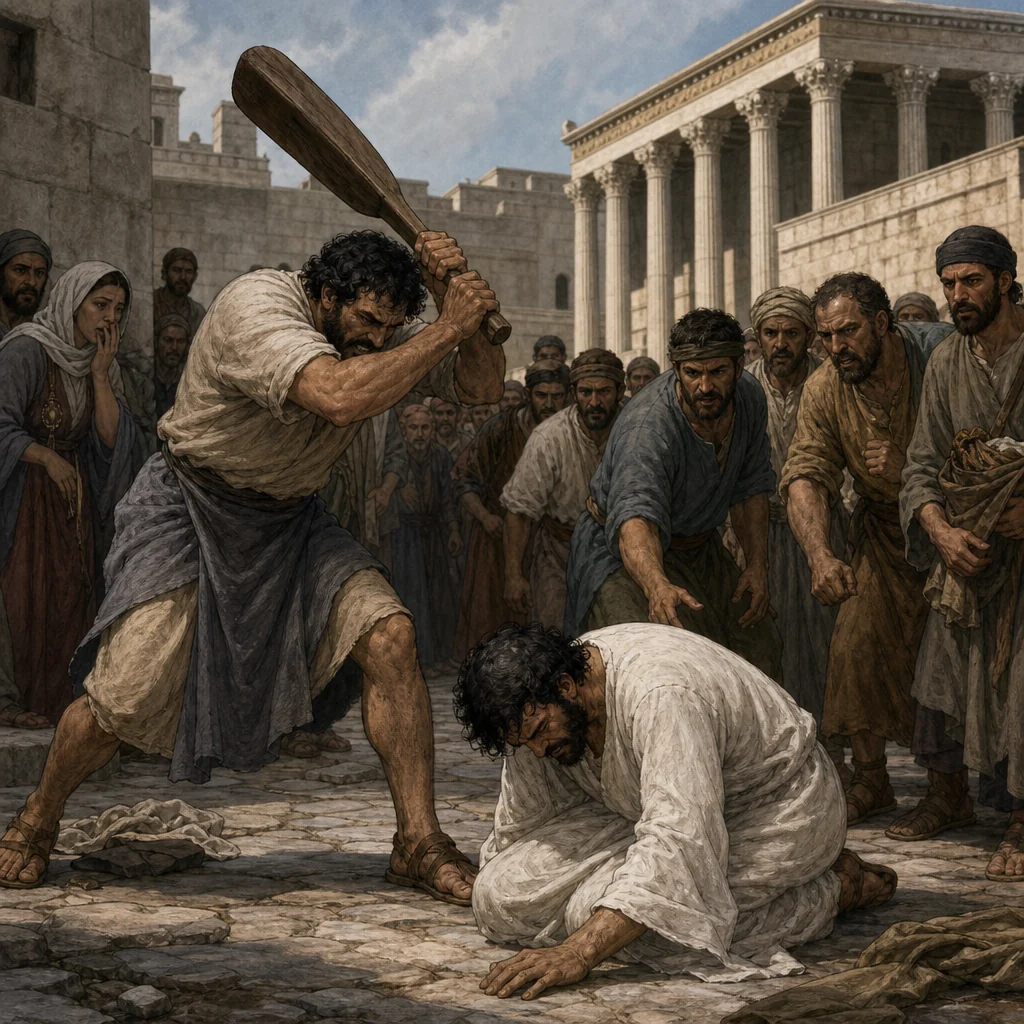
Panel 4: The Fuller’s Club
The martyrdom of James
Image: gpt-image-2Martyrs Named in the Famous Cities
A documentary sequence showing Eusebius’ catalogue of prominent church leaders martyred during the persecution: bishops and presbyters at Nicomedia, Antioch, Phoenicia, Palestine, Egypt, Alexandria, and Caesarea, framed by the historian’s act of recording only what can be properly witnessed or preserved.
Source: Eusebius 8.13.1
AI English text, gpt-5.4-mini
XIII. Of those rulers of the churches who were martyred in well-known cities, the first name that we must record on the monuments to holy men, as a martyr of the kingdom of Christ, is that of Anthimus, bishop of the city of the Nicomedians, who was beheaded. Of the martyrs at Antioch the best in his entire life was Lucian, a presbyter of that community; the same who in Nicomedia, where the emperor was, proclaimed the heavenly kingdom of Christ, first by word of mouth in an Apology, and afterwards also by deeds. Of the martyrs in Phoenicia the most famous would be the pastors of the spiritual flocks of Christ, beloved of God in all things, Tyrannion, bishop of the church at Tyre, and Zenobius, presbyter of the church at Sidon, and, moreover, Silvanus, bishop of the churches about Emesa. The last-named became food for wild beasts, along with others, at Emesa itself, and so was received up into the choirs of martyrs; the other two glorified the word of God at Antioch by their endurance unto death; one of them, the bishop, being committed to the depths of the sea, while that best of physicians, Zenobius, died bravely under the tortures that were applied to his sides. Of the martyrs in Palestine, Silvanus, bishop of the churches about Gaza, was beheaded at the copper mines at Phaeno, with others, in number forty save one; and Egyptians there, Peleus and Nilus, bishops, together with others, endured death by fire. And among these we must mention the great glory of the community of Caesarea, Pamphilus, a presbyter, the most marvellous man of our day; the merit of whose brave and good deeds we shall record at the proper time. Of those at Alexandria and throughout all Egypt and the Thebais who were perfected gloriously, the first that must be recorded is Peter, bishop of Alexandria itself, a divine example of the teachers of godliness in Christ; and of the presbyters with him Faustus, Dius and Ammonius, perfect martyrs of Christ; and Phileas, Hesychius, Pachymius and Theodore, bishops of the churches in Egypt; and countless other famous persons as well, who are commemorated by the communities in their own district and locality. It is not our part to commit to writing the conflicts of those who fought throughout the world on behalf of piety toward the Deity, and to record in detail each of their happenings; but that would be the especial task of those who witnessed the events. Yet I shall make known to posterity in another work those with whom I was personally conversant. In this present book, however, I shall subjoin to what has been said the recantation of the things that were wrought us, and all that befell since the beginning of the persecution, most profitable as they are to my readers.
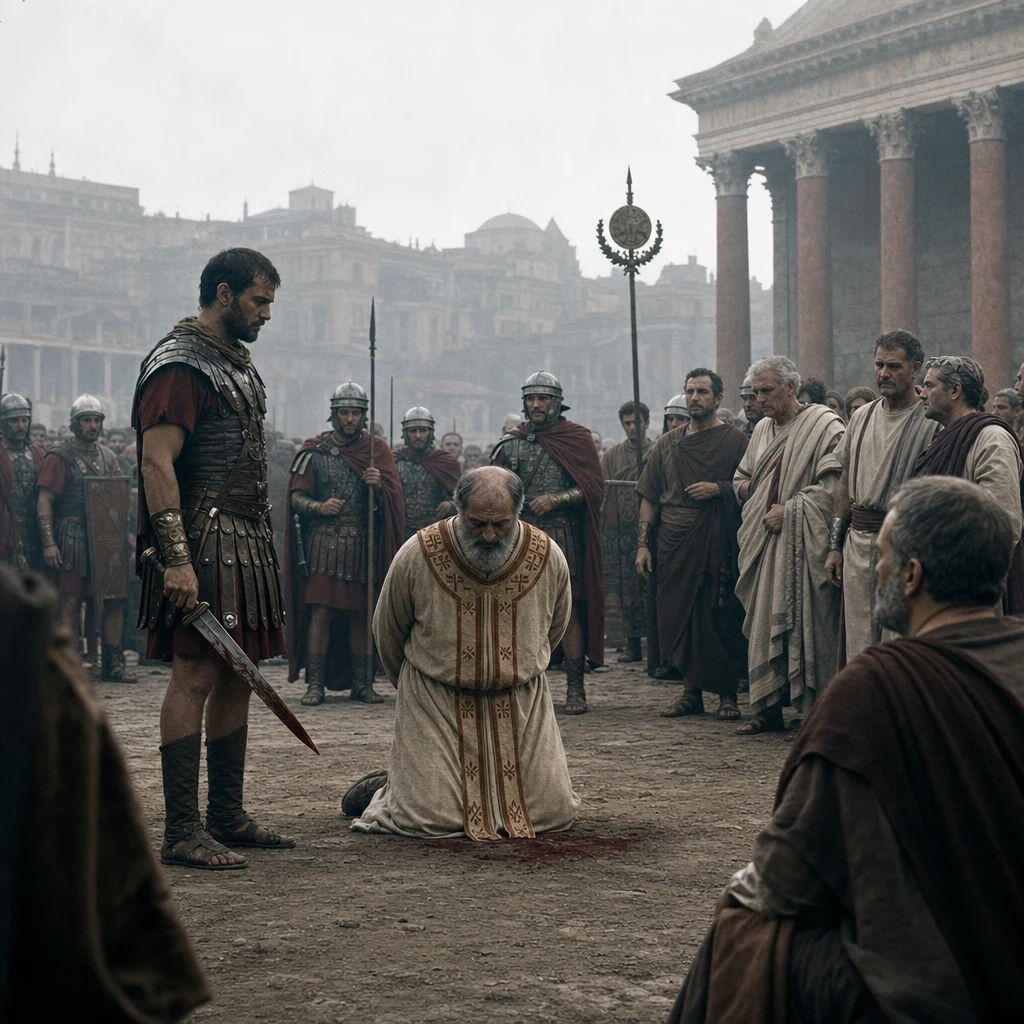
Panel 1: Anthimus of Nicomedia
Anthimus, bishop of Nicomedia
Image: gpt-image-2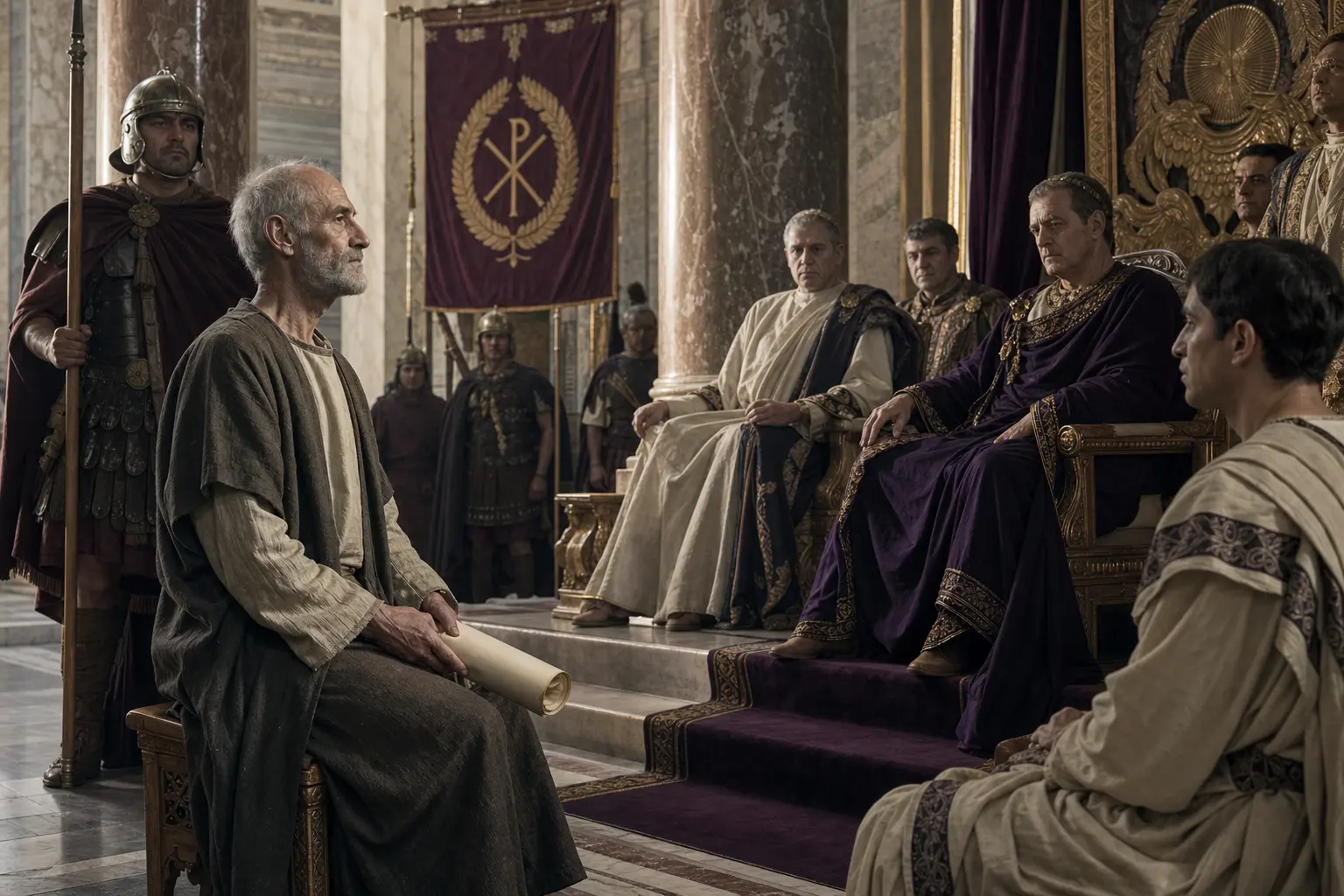
Panel 2: Lucian at Nicomedia
Lucian’s apology before imperial power
Image: gpt-image-2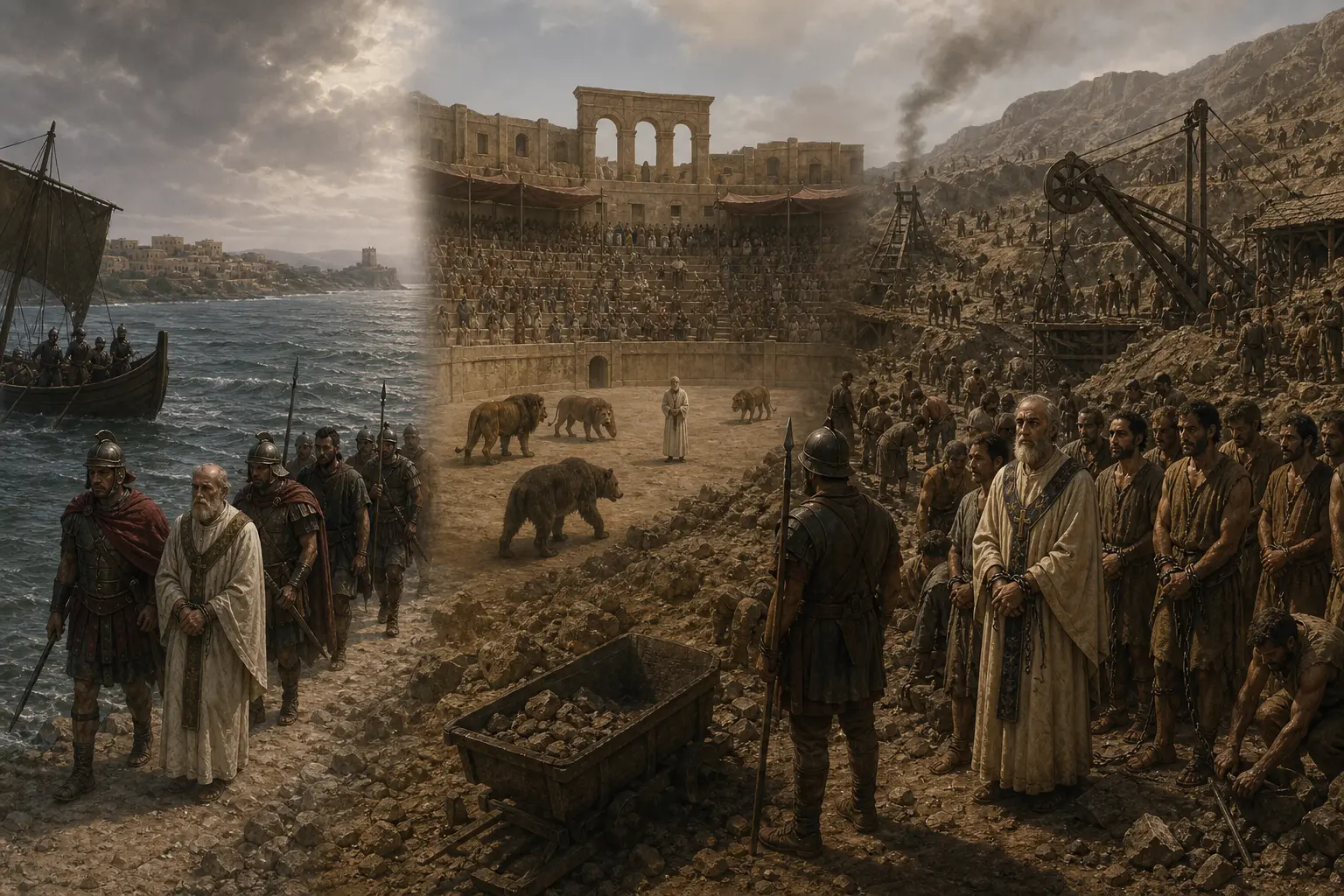
Panel 3: Martyrs of Phoenicia and Palestine
Phoenicia, Emesa, and Phaeno
Image: gpt-image-2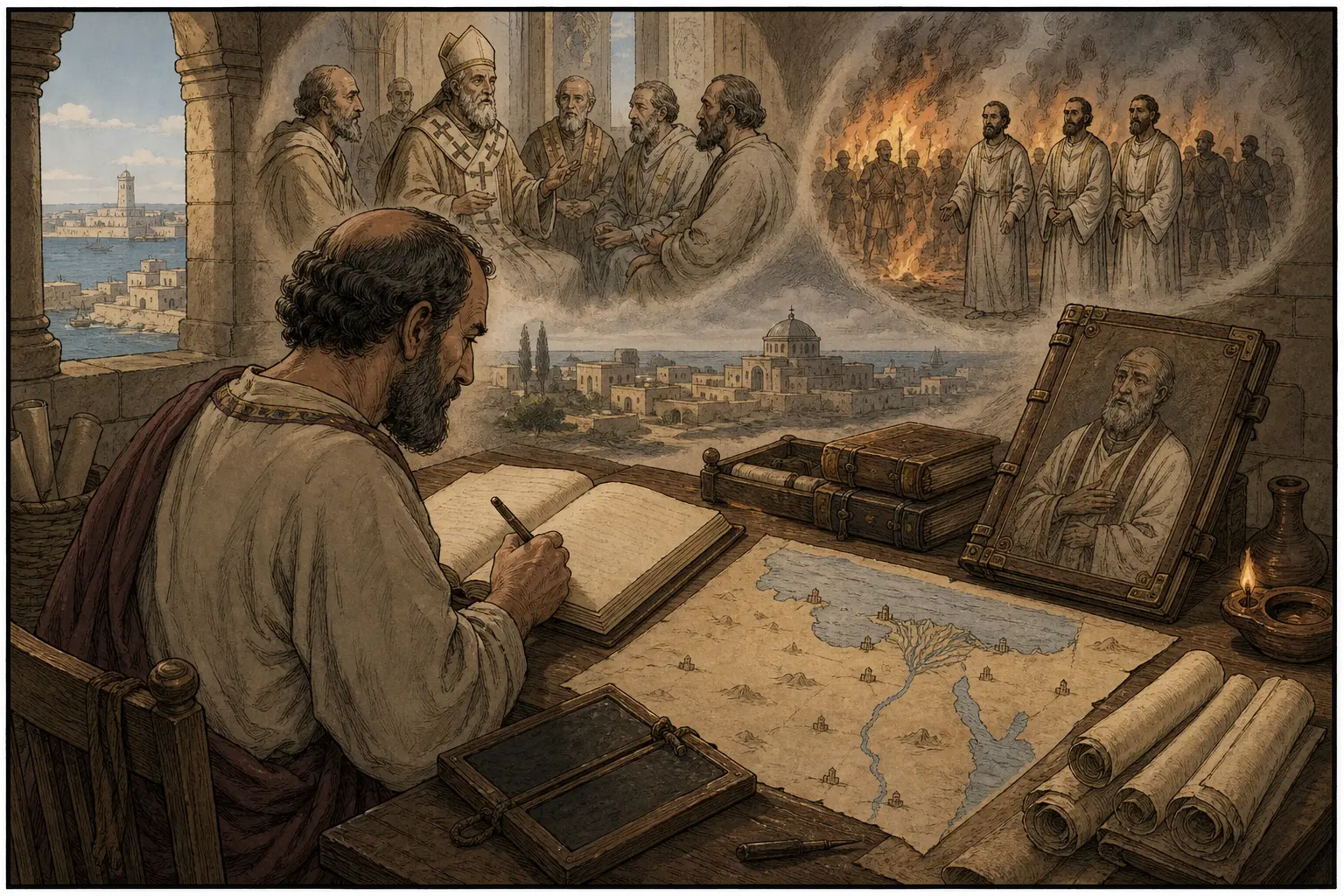
Panel 4: Egypt, Alexandria, Caesarea, and the Historian’s Record
Eusebius records what can be witnessed
Image: gpt-image-2Ignatius Guarded from Syria to Rome
The passage gives concrete scenes: notable bishops in Asia and Antioch, Ignatius sent under military guard from Syria toward Rome, his exhortations during stops in Asian cities, and his letters written at Smyrna to several churches, including Rome, before the expected beasts of martyrdom.
Source: Eusebius 3.36.1
AI English text, gpt-5.4-mini
XXXVI. At this time there flourished in Asia Polycarp, the companion of the Apostles, who had been appointed to the bishopric of the church in Smyrna by the eyewitnesses and ministers of the Lord. Distinguished men at the same time were Papias, who was himself bishop of the diocese of Hierapolis, and Ignatius, still a name of note to most men, the second after Peter to succeed to the bishopric of Antioch. The story goes that he was sent from Syria to Rome to be eaten by beasts in testimony to Christ. He was taken through Asia under most careful guard, and strengthened by his speech and exhortation the diocese of each city in which he stayed. He particularly warned them to be on their guard against the heresies which then for the first time were beginning to obtain, and exhorted them to hold fast to the tradition of the Apostles, which he thought necessary, for safety's sake, to give the form of written testimony. Thus while he was in Smyrna, where Polycarp was, he wrote one letter to the church at Ephesus, mentioning their pastor Onesimus, and another to the church in Magnesia on the Meander (and here, too, he mentioned the bishop Damas), and another to the church in Tralles, of which he relates that Polybius was then the ruler. In addition to these he also wrote to the church at Rome, and to it he extended the request that they should not deprive him of the hope for which he longed by begging him off from his martyrdom. It is worth while appending a short extract from this in support of what has been said. He writes as follows: “From Syria to Rome I am fighting with wild beasts, by land and sea, by night and day, bound to ten ‘leopards’ (that is, a company of soldiers), and they become worse for kind treatment. Now I become the more a disciple for their ill deeds, ‘but not by this am I justified.’ I long for the beasts that are prepared for me; and I pray that they may be found prompt for me; I will even entice them to devour me promptly; not as has happened to some whom they have not touched from fear; even if they be unwilling of themselves, I will force them to it. Grant me this favour. I know what is expedient for me; now I am beginning to be a disciple. May I envy nothing of things seen or unseen, that I may attain to Jesus Christ. Let there come on me fire, and cross, and struggles with wild beasts, cutting, and tearing asunder, rackings of bones, mangling of limbs, crushing of my whole body, cruel tortures of the devil; may I but attain to Jesus Christ.”
Panel 1: Bishops of Asia and Antioch
Polycarp, Papias, and Ignatius
Image: gpt-image-2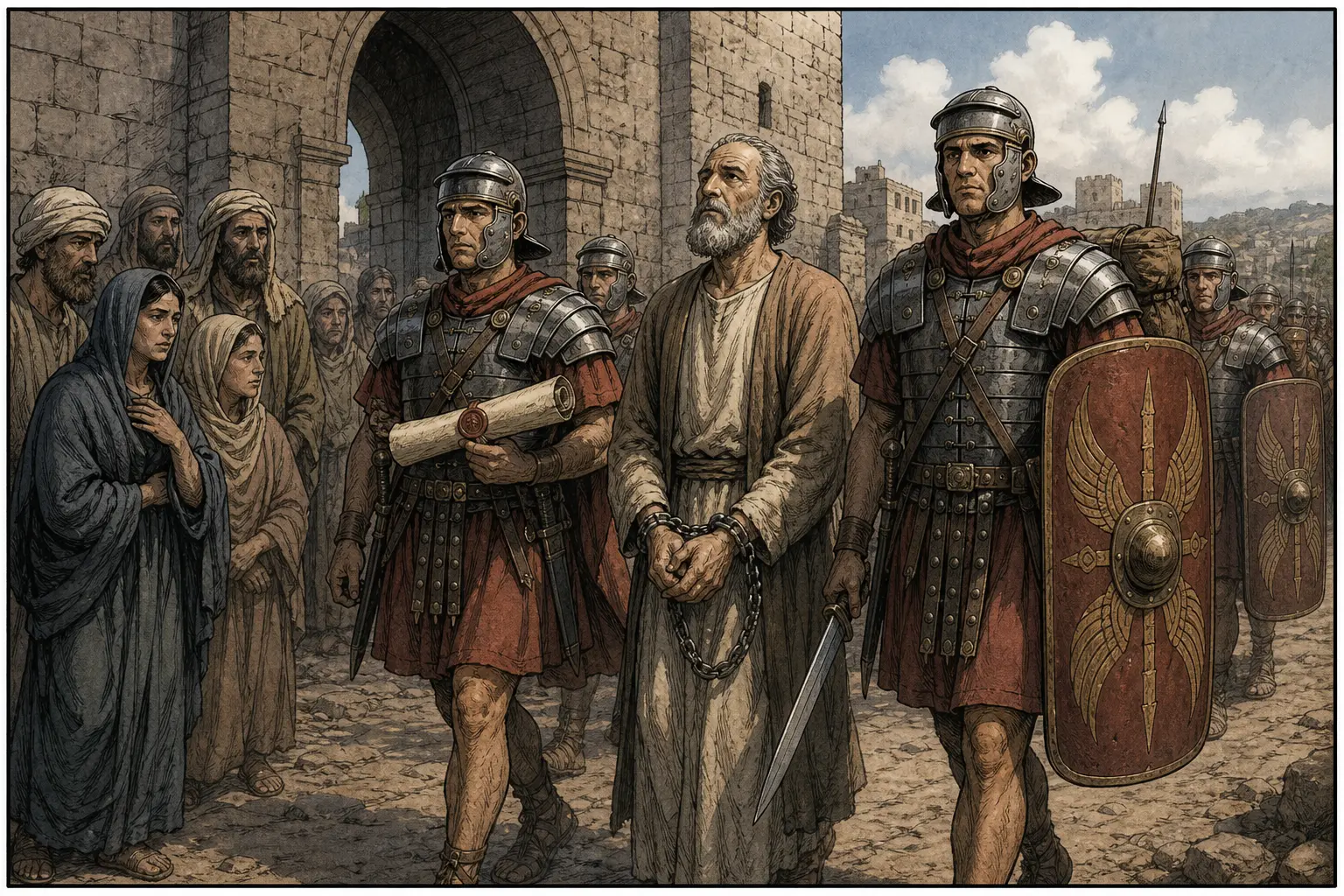
Panel 2: Sent from Syria
Ignatius sent under guard
Image: gpt-image-2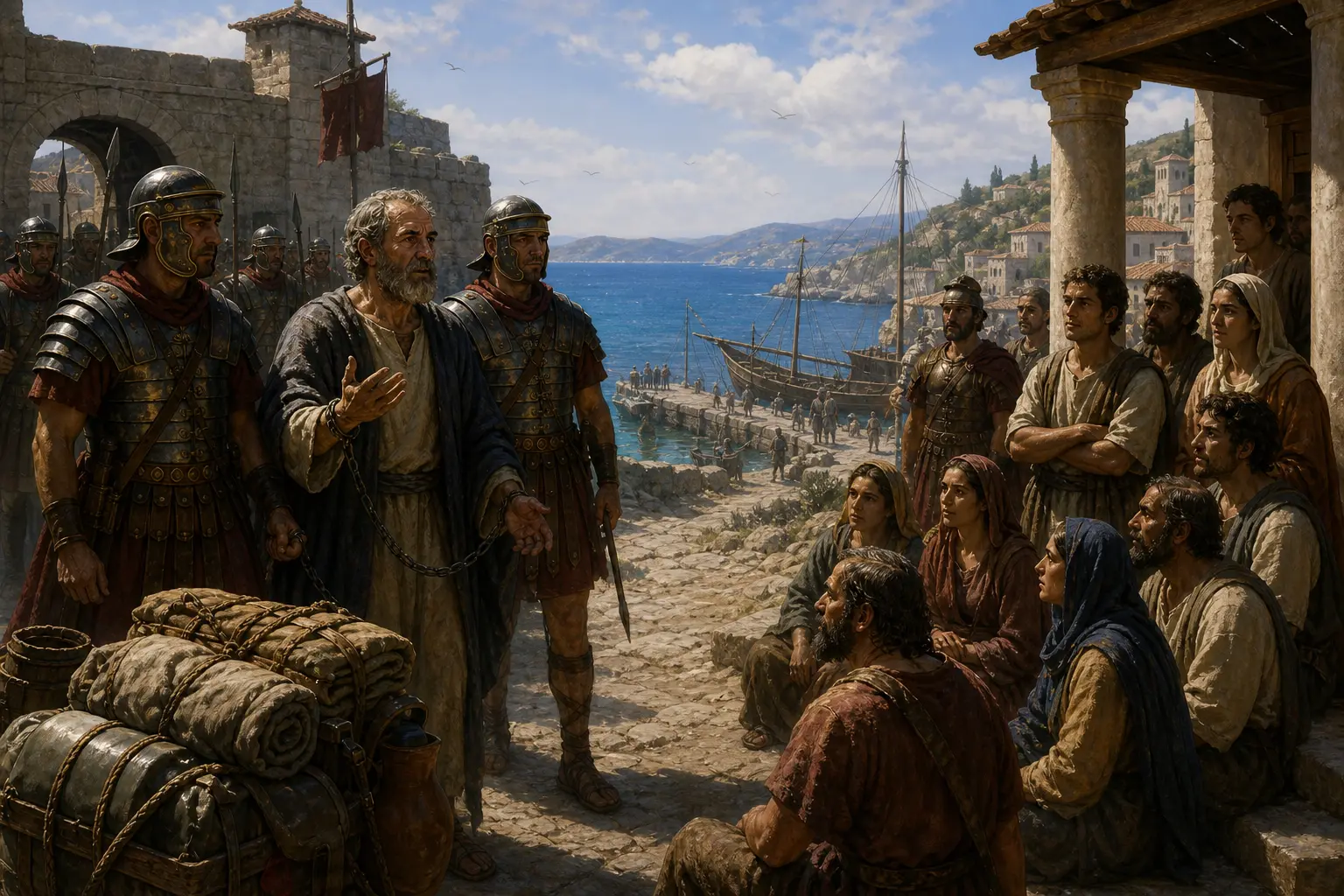
Panel 3: Through Asia under Guard
Strengthening the churches
Image: gpt-image-2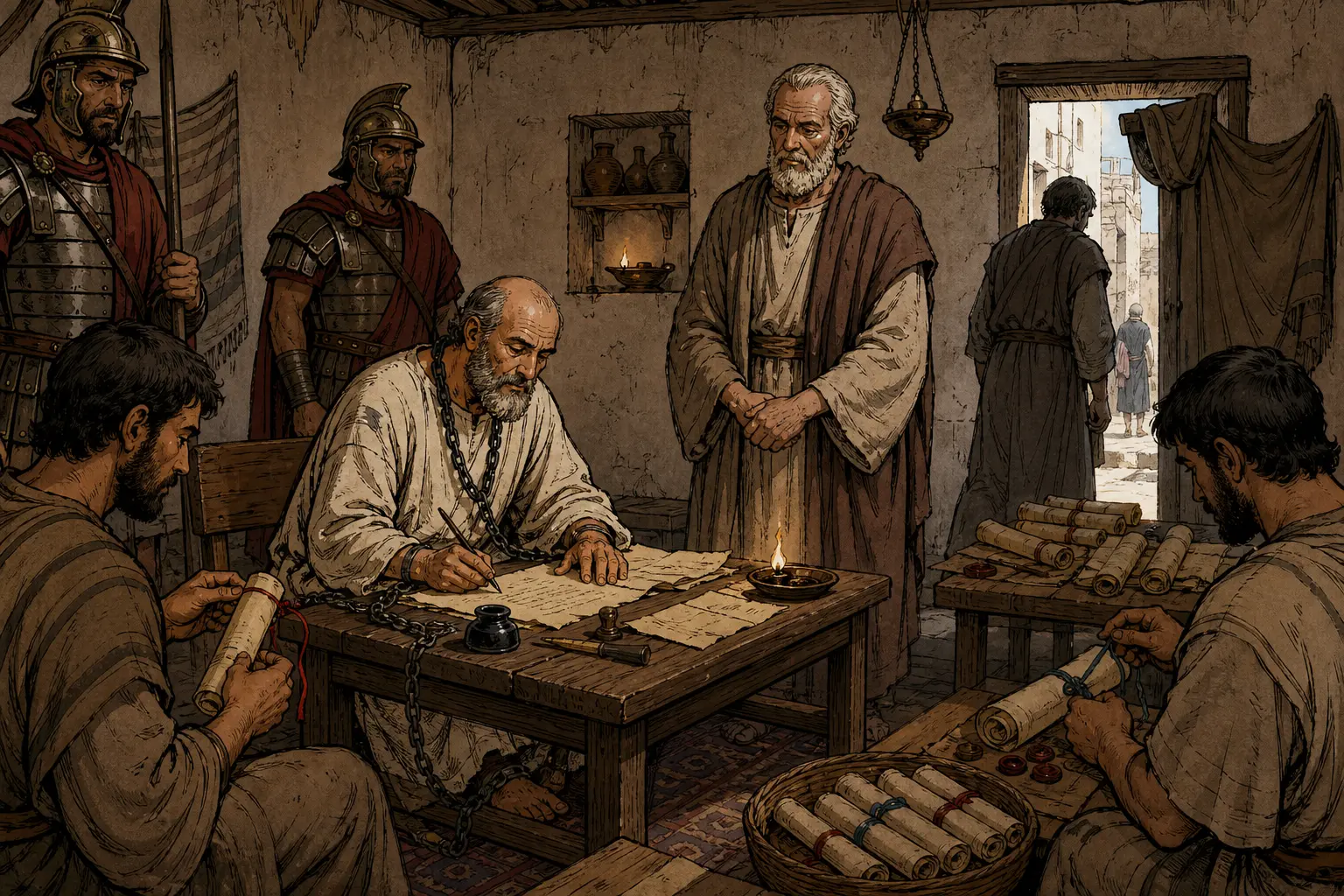
Panel 4: Letters from Smyrna
Letters to the churches
Image: gpt-image-2Vespasian, Pella, and the Fall of Jerusalem
Documentary-comic sequence for HE 3.5.1: Vespasian is acclaimed emperor in Judaea and gives the Jewish war to Titus; apostolic figures leave Judaea under threat; the Jerusalem church migrates to Pella before the war; Jerusalem is crowded and besieged, with the Temple destroyed by fire as reported through Josephus.
Source: Eusebius 3.5.1
AI English text, gpt-5.6-luna
V. After Nero had held the sovereignty for thirteen years,¹ the affairs of Galba and Otho² occupied a year and six months, and then Vespasian, who had distinguished himself in the operations against the Jews, was proclaimed Imperator by the army there and appointed Emperor in Judaea itself. He at once set off for Rome and entrusted the war against the Jews to his son Titus. Now after the ascension of our Saviour, in addition to their crime against him, the Jews at once contrived numberless plots against his disciples. Stephen was first stoned to death by them and next after him James, the son of Zebedee and brother of John, was beheaded.³ In addition to all, James, who was the first after the ascension of our Saviour to be appointed to the throne of the bishopric in Jerusalem, passed away in the manner described above, and the other Apostles were subjected to countless deadly plots and driven from the land of Judaea. They went on their way to all the heathen, teaching their message in the power of Christ, for he had said to them, “Go and make disciples of all the heathen in my name.”⁴ On the other hand, the people of the church in Jerusalem were commanded by an oracle given by revelation before the war to those in the city who were worthy of it to depart and dwell in one of the cities of Perea which they called Pella. To it those who believed on Christ migrated from Jerusalem, that when holy men had altogether deserted the royal capital of the Jews and the whole land of Judaea, the judgement of God might at last overtake them for all their crimes against the Christ and his Apostles, and all that generation of the wicked be utterly blotted out from among men. Those who wish can retrace accurately from the history written by Josephus how many evils at that time overwhelmed the whole nation in every place and especially how the inhabitants of Judaea were driven to the last point of suffering, how many thousands of youths, women, and children perished by the sword, by famine, and by countless other forms of death; they can read how many and what famous Jewish cities were besieged, and finally how terrors and worse than terrors were seen by those who fled to Jerusalem as if to a mighty capital; they can study the nature of the whole war, all the details of what happened in it, and how at the end the abomination of desolation spoken of by the prophets was set up in the very temple of God, for all its ancient fame, and it perished utterly and passed away in flames. But it is necessary to point out how the same writer estimates at three millions the number of those who in the days of the Feast of the Passover thronged Jerusalem from all Judaea and, to use his own words, were shut up as if in prison. It was indeed right that in the same days on which they had perpetrated the passion of the Saviour and benefactor of all men and the Christ of God they should be, as it were, shut up in prison and receive the destruction which pursued them from the sentence of God.
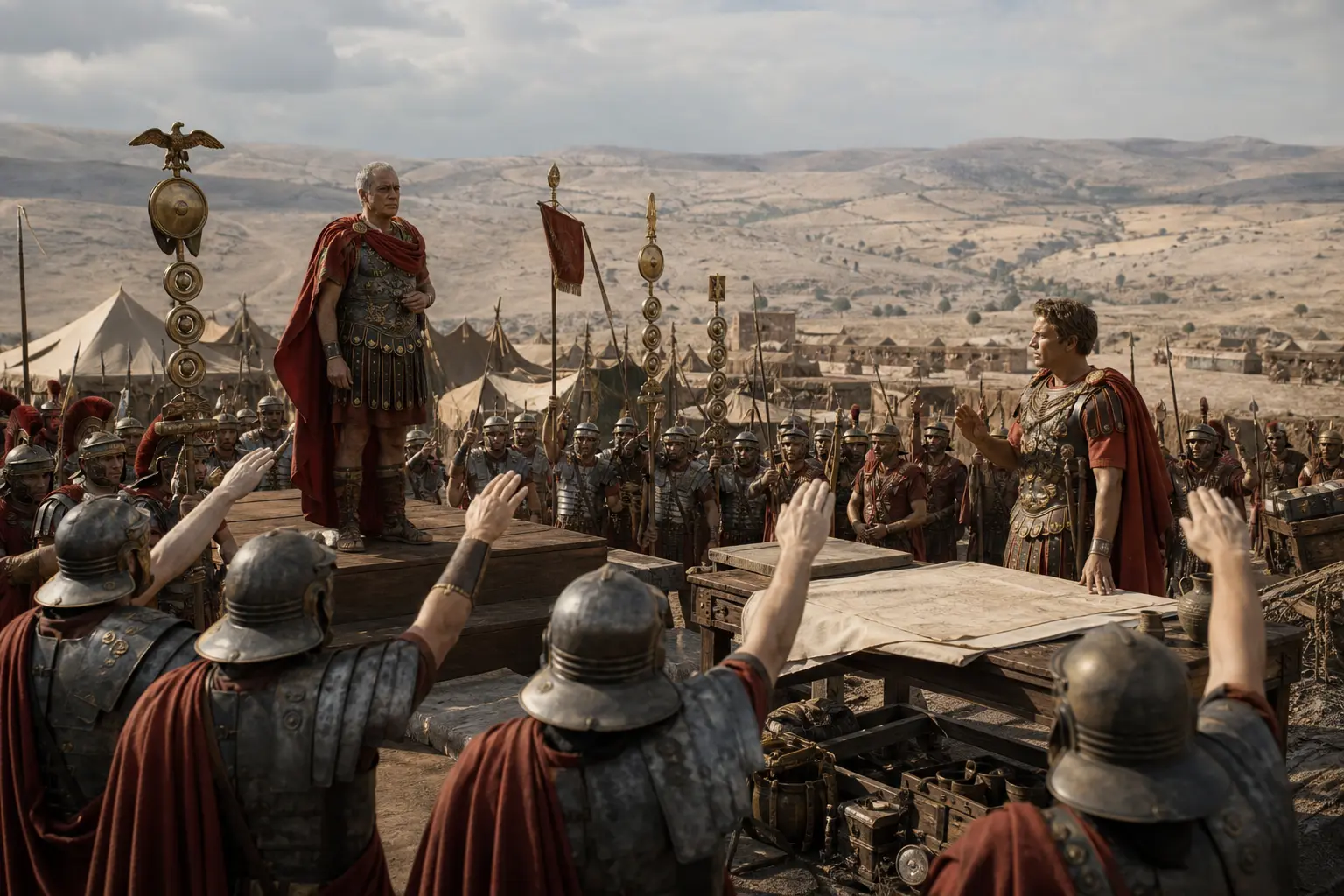
Panel 1: Vespasian acclaimed in Judaea
Vespasian proclaimed emperor in Judaea
Image: gpt-image-2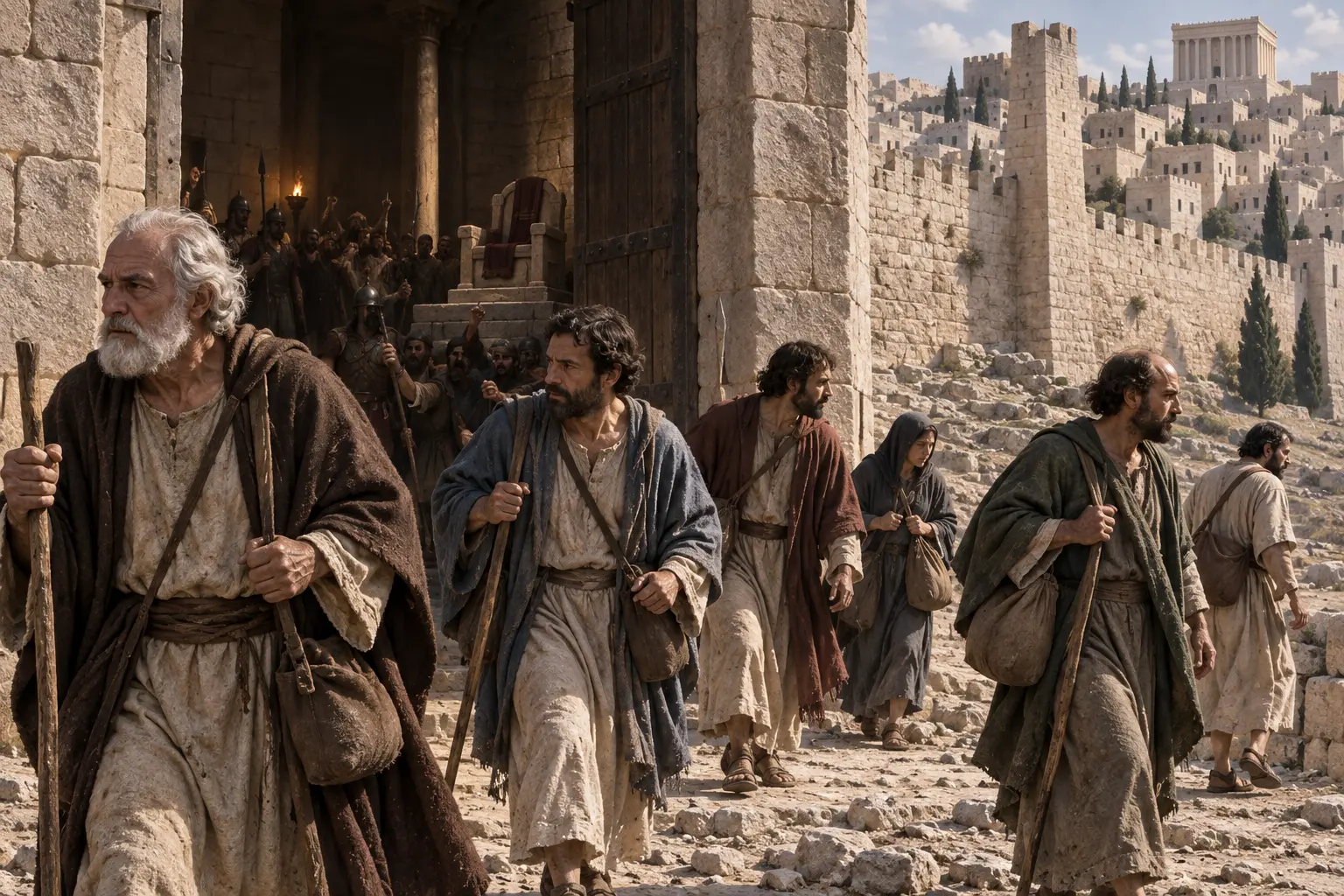
Panel 2: Apostles driven from Judaea
The apostles leave Judaea
Image: gpt-image-2